

May in the Minors: The Minor League Library
Baseball is the Sport With the Best Stories

Baseball is the sport with the best stories. Therefore, baseball is the sport with the best books. Some of my favorites include The Baseball 100 by Joe Posnanski, Rickey: The Life and Legend of an American Original by Howard Bryant, Only the Ball Was White: A History of Legendary Black Players and All-Black Professional Baseball Teams by Robert Peterson, and The Lords of the Realm: The Real History of Baseball by John Helyar. There are many more that I can list, but these five can give you a well-rounded baseball education.
With baseball books being an important part of my personal library, I knew that I needed to seek out books about the Minor Leagues for this project. Now, I tend to get carried away when I want to read about a topic and end up buying more books that I have time to read. My shelves are stacked with as many books that I “want to read” as books that I’ve “read.” As you can tell, I had to practice restraint here. Only reading a couple of books is like eating a handful of Haribo Gummy Bears instead of the entire bag. So, I had to be very targeted and precise in picking the best Minor League Baseball books that I could find.
I ended up reading two out of the three books that I bought. A .667 bating average? Not a bad day at the ballpark. Have good days at the ballpark consistently and maybe I get called up to the Majors. But hey, let’s dig into books in the Minor League Library…
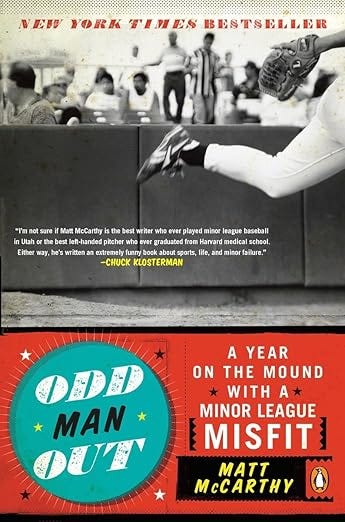
Odd Man Out: A Year on the Mound With a Minor League Misfit by Matt McCarthy
Imagine for a moment that you’re at the hospital….
I know, this isn’t a thing that anyone wants to imagine, but bear with me.
You have a fungal infection.
The doctor walks in to see you and his name is Dr. Matt McCarthy. You find out that he graduated from Harvard’s medical school. Okay, he’s a very smart guy. You’re in good hands. Oh, he completed his Bachelor’s degree at Yale? He must be incredibly smart. Wait a minute, he’s written three books and has been on the New York Times Bestseller list. This doctor is quite the guy and we haven’t even gotten to the full story yet! He pitched at Yale and was drafted by the Anaheim Angels…and then he wrote a book about his experiences.
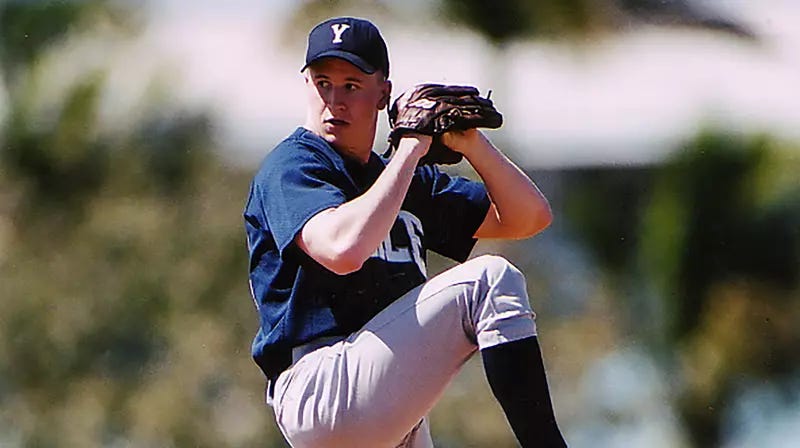
Now, my knowledge of college baseball is limited. My favorite college team has the unfortunate privilege of playing baseball in the Big Ten. That’s like Double-A ball in college. At the same time, I’m not going out of my way to watch the SEC or ACC until it’s the Regionals and the road to the College World Series has begun. I say this because I have only thought of Ivy League Baseball once in my entire life before reading this book. President George H.W. Bush played at Yale. Dr. McCarthy and a former President are both part of the Yale Bulldog Legacy.
As you might guess, Yale Baseball is not a powerhouse. Their record when McCarthy played on the team from 1999-2002: 53-109, it was the worst four-year span in the history of Yale’s Baseball program. In the words of McCarthy, “The university has a sterling reputation in many arenas; unfortunately, baseball is not one of them…our coach finally came upon a solution to stop all the losing: he scheduled fewer games” (p. 7).
Despite the poor team record, there were Major League scouts that coveted his talents. “When I was twenty-one, I could throw a baseball 92 miles an hour. This led to strange courtship between my left arm and a series of pencil-mustached, overweight middle-aged men” (p. 1). McCarthy received a call that the Anaheim Angels drafted him in the twenty-first round of 2002 MLB Draft. He was now a professional baseball player.
McCarthy’s professional baseball career would begin and end in Mesa, Arizona, the sight of the Angels’ Spring Training facilities. Surrounded by pitching coaches evaluating their talents, McCarthy and his teammates went through the grind of Spring Training hoping to be assigned to one of the organization’s ball clubs. McCarthy was sent to the Provo Angels, a Rookie Club of the Pioneer League. Two things stood out about Provo: the scenic mountain view and the predominantly Mormon culture of the town.
As the book’s title suggests, McCarthy’s professional baseball career only lasted one year. He eventually got cut at next year’s Spring Training. His experience in Minor League Ball is still fascinating to read about. The team was managed by the emotionally volatile Tom Kotchman. Kotchman loved the game of baseball and had emotional moments bonding with the team, but he also prone to fiery outbursts when things didn’t go how he wanted. McCarthy built relationships in the club house of other guys just trying to make to the Big Leagues and there was racial tension with the Dominican players. The Mormon lifestyle ran contrary to the baseball lifestyle, but McCarthy lived with a generous Mormon family that followed the team. All-in-all, the book gives you a full picture of McCarthy’s time in Provo, Utah.
His season and performance were like a rollercoaster. He pitched as a starter, then got moved to the bullpen. McCarthy would pitch well one night, then terrible the next. The team finished 38-38 and their season ended in the playoffs. His last outing was the part of the book that resonated with me the most. McCarthy pitched in the sixth inning of the final game of the regular season. The Angels were up 2-0. He recorded two strikeouts, one hit, and no runs. He did his job and was asked if we wanted to take the mound for another inning. He said no.
“My decision not to pitch another inning ran contrary to everything Kotchman had preached all summer and it stood in start contrast to the beginning of the season, when I threw a tantrum after being taken out of a game. I simply wasn’t the same person I had been at the season’s start. I wasn’t playing to win; I was playing not to fail. It was the last game I would ever pitch in a Provo Angels uniform and I regret it to this day” (p. 254).
Very rarely does someone go out on top in sports. Only a select few win championships at the peak of their prime, and an even fewer number win at the end of their career. Most people’s experiences in competition end in heartbreak or regret. McCarthy’s career ended by getting cut in Spring Training, but his actual time competing in a game ended because he chose to end it while performing well. He wasn’t competing to win, but rather competing not to lose. There just might be an interesting life lesson in this particular Minor League Baseball story.
Where Nobody Knows Your Name: Life in the Minor Leagues of Baseball by John Feinstein
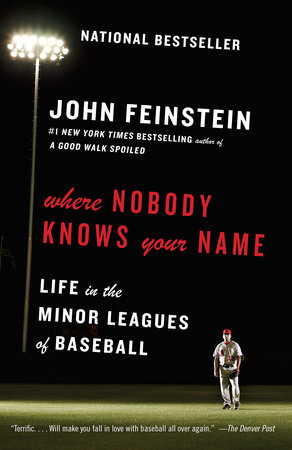
The second book in the Minor League Library is not about one guy, but many. John Feinstein anthology tells the stories of players, coaches and umpires in Minor League Baseball. I won’t attempt to tell every story in the book. That was Feinstein’s goal and he did an excellent documenting them. I will attempt to give a succinct summary of my favorite stories from the book.
So what exactly does it mean for a ballplayer to get called up from the Minors to Major League Baseball?
“All of them-even those that go on to be multimillion-dollar-a-year stars can remember that first call-up. For others, who dance with stardom and then return to the minors, getting called back up may be even more gratifying because the first time around they take it for granted. For some, a brief trip to the majors, even if it lasts only a few days, is the highlight they carry with them long after they have retired. And there are others who never get that call even once…they all grow up dreaming of playing in the big leagues-in the massive ballparks with forty thousand or more fans screaming their names as they make a heroic play on the mound, at the plate, or on the field. No one dreams about playing in Triple-A” (p. 11).
Bull Durham will be the grand finale of this series. Did you know that Crash Davis was a real ballplayer? We know the name as Kevin Costner’s character, but the real Crash Davis played for the Durham Bulls in the 1940s (p. 57).
John Lannan was a pitcher for the Washington Nationals. He was called up in 2007, the same year that Barry Bonds was chasing the all-time home run record. Fate would have it that Lannan faced Bonds when he sat tied with Henry Aaron at 755 home runs. Lannan did not want to be the guy that gave up #756. Lannan bested the greatest home run hitter of all-time, walking him once and getting him out three other times with one of those outs being strikeout. The kicker? Lannan was sent back down to the Minors a few years later. At the end of the day, sports are a business (p. 67-68).
Dave Rosenfield, ever heard of him? Me neither, but he’s a special guy. He’s been handwriting the schedule for Norfolk, Virginia’s Triple-A team since 1963 (p. 93-94).
Check out these Minor League team names: Savannah Sand Gnats, Richmond Flying Squirrels, Charleston RiverDogs, Augusta GreenJackets, and the Toledo Mud Hens, formerly known as the Swamp Angels (p. 143). Minor League Baseball has some incredible and unique team names. I also like the Columbus Fireflies. Rocket City Trash Pandas, and the Binghamton Rumble Ponies.
Tales From the Dugout: 1,001 Humorous, Inspirational, & Wild Anecdotes From Minor League Baseball by Tim Hagerty
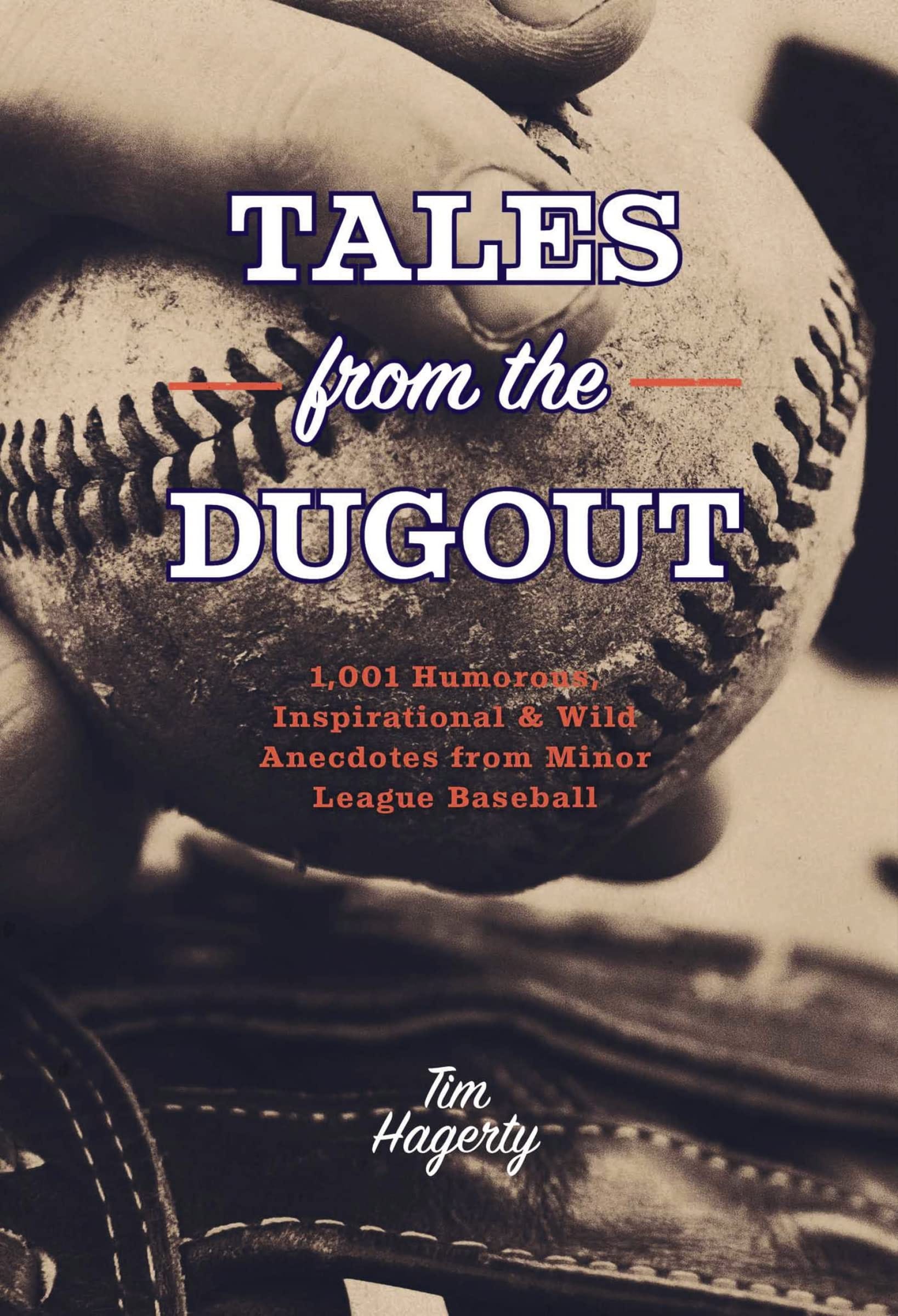
This book is the one that I did not read. However, I cannot justify titling this post “The Minor League Library” and only writing about two books. In my very humble opinion, three books make a library. Two books are just two books. Fortunately, Hagerty’s book is not one that you just sit down in a coffee shop and read. It’s one of those books that you find in a bathroom back when people read while doing their business. It is a very light, as well as light-hearted read, that you can pick up and read a random page for fun facts about Minor League Baseball. Here are a few good ones:
Grandstander
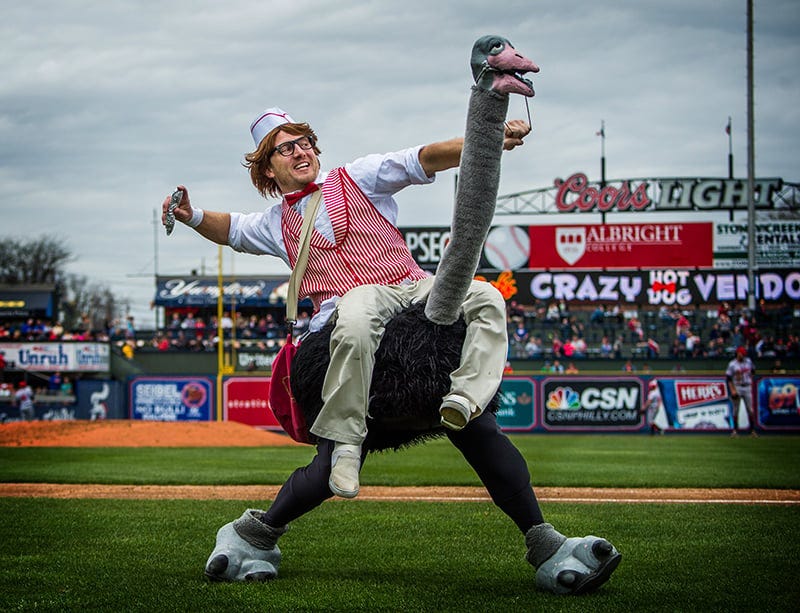
“The Double-A Reading Fightin Phils have a crazy hot dog vendor named “Crazy Hotdog Vendor.” The nightly character rounds the stands on a stuffed ostrich while flinging free hot dogs into the crowd in Reading, Pennsylvania. He wears a paper hat, a bow tie, and thick glasses” (p. 78).
I think I found my new dream job post-retirement. And yes, you can buy Crazy Hotdog Vendor merch.
Macho Minor League
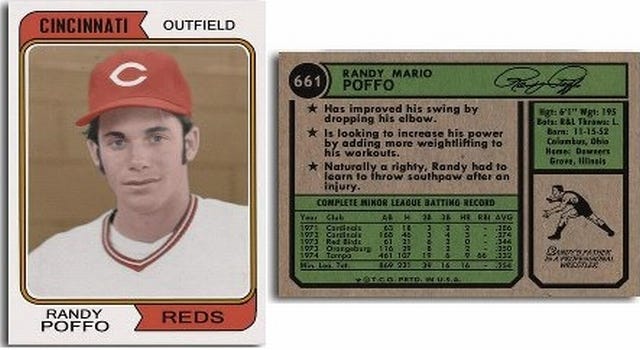
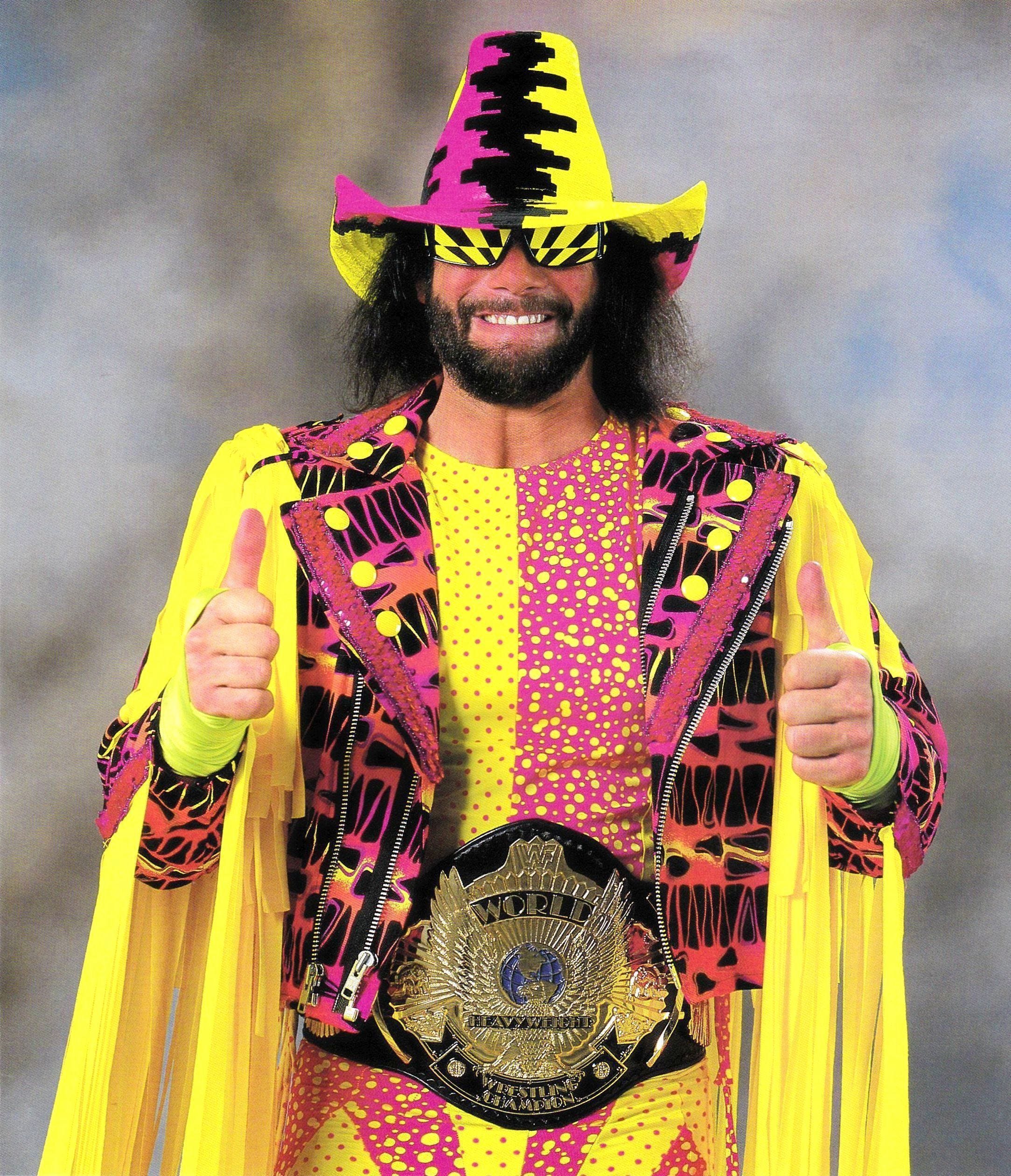
“Randy Poffo traded grand slams for body slams. Poffo played four seasons in the St. Louis Cardinals’ and Cincinnati Reds’ organizations in the 1970s as a catcher and outfielder before quitting to become a professional wrestler. You probably know him as “Macho Man” Randy Savage” (p. 154).
Flower Power
“George Spelius ran the Single-A Midwest League from a Wisconsin floral shop in the 1980s. The league president/florist had two phone lines-one for flower orders and one for Midwest League business” (p. 246).
Here’s how I read the situation: A flower shop is a front for Minor League Baseball. Could this be a mafia criminal conspiracy? I’m just asking questions, man.
Man v.s. Horse
“The Triple-A Rochester Red Wings invited a winless racehorse to try his luck against a human on August 18, 2000. Zippy Chippy brought his 0-86 record to Frontier Field in Rochester, New York, where he raced Red Wings player José Herrera on a makeshift track in the outfield. Herrera won the race and Zippy lost again” (p. 292).
I did a quick Google search of both Herrera and Zippy Chippy. Herrera briefly played in the Majors with the Oakland Athletics and spent some time in the Korean Baseball Organization. Zippy Chippy’s career record was 0-100, but he lived a happy life. That’s what matters.
More Treadmill Talk
The San Diego Padres traded minor league catcher Sean Mulligan to Cleveland for $75,000 and a used treadmill in 1997” (p. 347).
Poor Sean…

This section about Tales From the Dugout turned out to be really fun to write. These are just a few stories from Minor League Baseball’s weird, wild, and whacky history. Tim Hagerty is a broadcaster for the Triple-A El Paso Chihuahuas and he wrote another book about Minor League Baseball. I just might have to get that one as well.
I’ll end with this: Minor League Baseball is for the Sickos.
Awesome! Super fun article, Josh! Totally love the Crazy Hotdog Vendor!!⚾️😃🌭
Excellent! I recommend Class A: Baseball in the Middle of Everywhere by Lucas Mann, check it out it was a great read.