

A Real Pain
A Beautiful Film About Pain and Grief and Life

I just got done watching A Real Pain. The movie was written and directed by Jesse Eisenberg, who also plays one of the main characters, David Kaplan. Eisenberg is nominated for Best Original Screenplay. Kieran Culkin plays David’s cousin, Benji. Culkin won the Golden Globe for his role and is nominated for an Oscar for Best Supporting Actor. Right off the bat, I can tell you that this film deserves its two Oscar nominations. A Real Pain is a human story.
David and Benji are cousins. They grew up together, born just three weeks apart if I remember correctly. For many people, cousins are a combination of best friends and siblings. For people that grow up with their cousins, they’re the people they are most excited to see at the family reunion. Now, I am intentional when I say “they”. Much of this I have observed with my wife and her cousins. She comes from a big family with lots of cousins that grew up together. I have a different experience with my cousins. Not a bad experience, just different. I’m six years older than my oldest cousin and twenty years older than my youngest (I think?). My cousins live anywhere between an eight and twenty four hour drive from me. It’s not exactly the same experience as growing up with your cousins and considering them your extended siblings or even your best friend. On the rare occasion that there is a family reunion, I tend to gravitate towards the parents of my cousins…they can actually legally drink beer. But, I digress…
David and Benji are grieving the death of their grandmother, who was a Holocaust Survivor. As a way to honor her, they take a trip to Poland trace her steps in life. They participate in an abbreviated Holocaust tour that takes them to the Jewish neighborhoods of Poland, monuments established to honor those impacted by the Holocaust, remnants of the ghettos, and a concentration camp. The tour is led by a British historian and they are joined by an older Jewish couple, a recently divorced woman, and a man who survived the Rwandan Genocide and eventually converted to Judaism. It’s amazing how many different types of people you meet in a small gathering like this tour. Each person has their own unique story and their unique reason for participating. It’s not often that you get those experiences with strangers, but it’s illuminating when it happens.
The two guys leave the tour early to visit the home where their grandmother grew up. The movie does something very powerful. It weaves together the global pain of the Holocaust with the personal pain of losing someone you love.
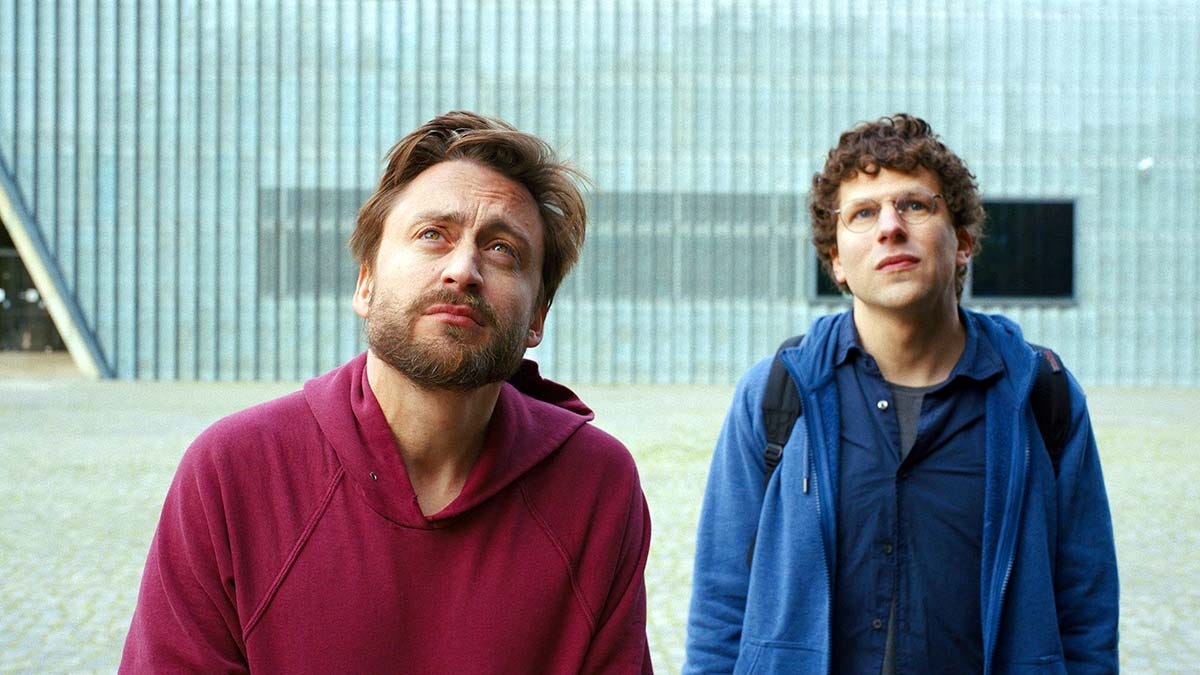
David and Benji could not be more different people. David has a family, a job, is more reserved, and gets anxiety about rocking the boat. Benji is single, living life (unemployed and wandering), wears his emotions on his sleeve, and is the literal wave that rocks the boat. With any movie about two people handling grief and pain differently, the two guys butt heads quite frequently and even loudly…but they are cousins that grew up being inseparable.
Here is one of the more lighthearted scenes of the movie that also showcases the opposing personalties of our two main characters. While visiting a World War II Memorial, Benji decides to re-enact the action and gets the other tourists to join along. David sticks back to take pictures.
There are so many moments from Kieran Culkin’s performance that hit you. First, you see it in his eyes throughout the film. His character is carrying a heavy emotional load and never really find out everything that is going with him. Like anyone we meet in life, we don’t get the full picture, just bits and pieces. There’s a scene when Benji and David are smoking weed on the roof of their hotel and Benji tries to guilt trip David about falling asleep on this one occasion when they were hanging out. The guilt trip worked and David later apologizes. After the apology, Benji says something along the lines of, “I was never mad you fell asleep. I was just happy you were there for me.” There’s another scene when he describes a dinner with their grandma and he was late (and high) and she slapped him in the face in the restaurant. David is shocked and Benji just goes, “It’s ok. She cared more about me than she did what people in that restaurant thought of her.” It’s some really powerful stuff.
What I’m trying to say is give Kieran the Oscar. He earned it. Then, we can say that the actor with the two most iconic “look across the table moments” in history is an Oscar winner.
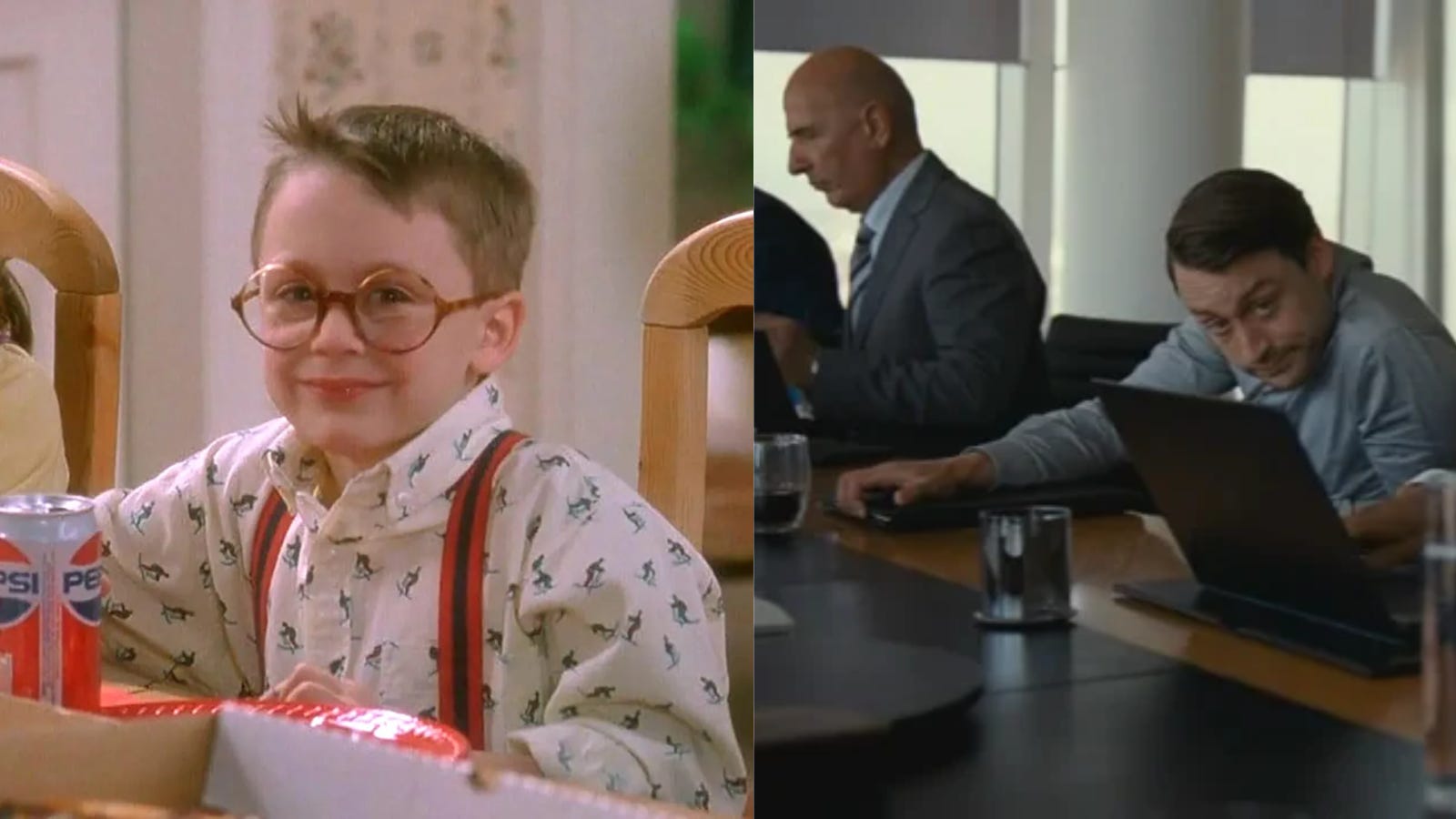
Here’s a small spoiler warning to the ending of the movie just in case you haven’t seen it….
With all movies, you expect everything to be resolved in the end. This movie is A Real Pain. We don’t get a cinematic moment of healing. Nothing is resolved. The two cousins give their hugs and go on their separate ways. David to his family, and Benji to wandering. I love Eisenberg’s choice in this. Again, this is a human story. This is life. Sometimes there’s no happy ending, but that doesn’t make it a sad ending. You just come to the end of your trip and life goes on.
Wow luv your description . Definitely want to see